
Growth Navigate Funding is a search topic that brings together startup tools, funding options, and business growth strategies. Founders often look it up when they want to plan their next stage, find capital, or check whether a growth resource is worth their time. This guide explains the topic in clear, practical terms.
Starting a business is hard, and growing it is harder. You need a solid plan, the right tools, and enough money to carry out your ideas. Many founders struggle because they chase funding before they understand their real needs.
In this article, you will learn what Growth Navigate is, how startup tools can support your work, and how to build a growth strategy. You will also see the main types of business funding, how to prepare for them, and how to check whether a service is legitimate. Use the sections that match your stage and goals.
What Is Growth Navigate?
Growth Navigate is a name founders may come across when researching tools, guidance, and strategies for building a business. It is generally associated with startup support, growth planning, and the funding questions that come with scaling. Understanding what it is helps you judge whether it suits your needs.
Because the term is used loosely online, it helps to look closely at what any provider actually offers. Some resources focus on education, while others focus on software, advisory, or funding connections. Reading the fine print on services and ownership keeps you from assuming too much.
For most founders, Growth Navigate is best treated as a starting point for research rather than a guaranteed solution. Compare it with other startup resources and test any claims against your own goals. This habit protects your time and budget.
What Does Growth Navigate Offer to Startups and Businesses?
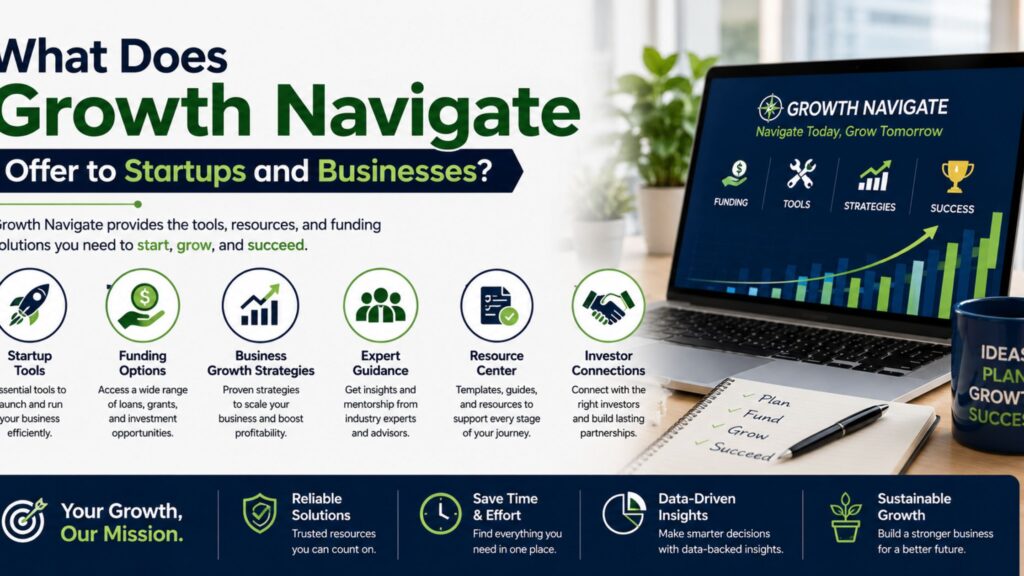
Growth Navigate is commonly described as offering resources that help businesses plan, market, manage money, and grow. These typically include planning frameworks, digital tools, and educational content for early-stage teams. The exact scope can vary, so founders should confirm details directly.
Startups often need help in several areas at once, such as validating ideas, finding customers, and tracking finances. A single platform that covers these basics can reduce the number of separate tools you must manage. That convenience matters most when your team is small.
Established businesses may find value in the same resources when they want to refresh a stalled growth plan. The key is matching each offering to a specific business problem. Avoid paying for features you will not use in the next few months.
Growth Navigate Startup Tools: Features and Potential Benefits
Startup tools are designed to save time and bring structure to decisions that founders often make by instinct. Typical categories include planning, marketing, finance, and daily management. Each can bring benefits when used consistently, though results depend on how well you apply them.
No tool replaces clear thinking about your customers and market. Software can organize your data, but it cannot tell you which problem to solve first. Treat any platform as support for your strategy rather than a substitute for it.
Before adopting a tool, define what success looks like, such as faster reporting or more qualified leads. Then review progress after a set period. This keeps your tool stack lean and tied to real outcomes.
Business Planning and Goal Setting
Planning tools help founders turn a rough vision into written goals, milestones, and timelines. A clear plan makes it easier to explain your direction to partners, employees, and investors. It also reveals gaps in your thinking before they become expensive.
Good goal setting breaks big ambitions into quarterly and monthly targets. Each target should have an owner and a measurable result. Reviewing these goals regularly keeps the whole team aligned as conditions change.
Marketing and Customer Acquisition
Marketing tools support tasks such as email campaigns, social media scheduling, and lead tracking. They help small teams reach more people without hiring a large department. The real benefit comes from learning which channels bring customers at a reasonable cost.
Customer acquisition works best when you understand who your ideal buyer is. Use data from early campaigns to refine your message and focus your spending. Over time, this reduces wasted effort and improves return on investment.
Financial Planning and Performance Tracking
Financial planning tools help you forecast revenue, manage expenses, and monitor cash flow. Knowing your numbers lets you spot problems early and plan funding needs with confidence. Even simple dashboards can improve decision-making for a young business.
Performance tracking connects spending to results. Metrics such as customer acquisition cost, monthly recurring revenue, and burn rate show whether growth is healthy. Reviewing them regularly gives you evidence to support funding conversations.
Productivity and Business Management
Productivity tools help teams organize tasks, share files, and communicate without constant meetings. A well-chosen system reduces confusion about who is responsible for what. This is especially useful for remote or growing teams.
Business management features can also streamline invoicing, scheduling, and customer records. Automating these routines frees time for strategic work. Keep your systems simple so that adoption stays high across your team.
How to Build an Effective Business Growth Strategy
A growth strategy is a clear plan for how your business will gain customers, revenue, and market share over time. It connects your goals to specific actions and resources. Without one, teams tend to chase opportunities that do not support a larger direction.
Effective strategies are built on evidence rather than guesswork. Look at your sales data, customer feedback, and market conditions to find where growth is most likely. This research grounds your plan in reality.
A strategy should also stay flexible. Markets shift, competitors appear, and customer needs change. Build in regular reviews so you can adjust course without losing sight of your long-term objectives.
Identify Your Business’s Biggest Growth Bottleneck
A bottleneck is the single constraint that limits how fast your business can grow. It might be low website traffic, a weak sales process, limited production capacity, or a lack of cash. Fixing minor issues while ignoring this constraint rarely produces real progress.
To find it, map your customer journey from first contact to repeat purchase. Look for the stage where the most people drop off or where work piles up. That stage is usually where your effort will have the greatest impact.
Set Clear and Measurable Growth Objectives
Vague goals like “grow faster” make it hard to know whether you are succeeding. Strong objectives state a number and a deadline, such as increasing monthly revenue by twenty percent within six months. This clarity guides daily decisions.
Link each objective to a metric you can track. Share these targets with your team so everyone understands what matters most. Realistic goals, based on past performance, keep motivation high and results credible.
Allocate Resources Based on Business Priorities
Every business has limited time, money, and attention. Allocating them according to priority means funding the activities most likely to remove your bottleneck. Spreading resources evenly across many ideas usually dilutes results.
Review your budget against your objectives at least quarterly. Move money away from low-performing efforts and toward those showing traction. This disciplined approach helps small businesses compete with larger rivals.
Track Results and Adjust Your Strategy
Tracking turns strategy into a learning process. Choose a handful of key indicators and review them on a regular schedule. Compare results to your targets and note what is working and what is not.
When numbers fall short, investigate causes before making changes. Test one adjustment at a time so you can see its effect clearly. Over time, this cycle of measuring and refining builds a stronger, more resilient business.
Growth Navigate Funding: What Founders Should Know
Funding is one of the most searched topics around Growth Navigate, and it is also one of the most misunderstood. Founders often assume that a growth platform automatically provides capital. In practice, funding depends on the specific service, your eligibility, and the terms involved.
Before pursuing any funding path, clarify what you actually need money for and how it will generate returns. Capital is a tool, not a goal. Businesses that use it with a clear plan tend to make better decisions.
Always verify claims about funding in writing. Ask who provides the money, what it costs, and what you must give up in return. This protects you from surprises later.
What Is Growth Navigate Funding?
Growth Navigate funding generally refers to financing options or guidance linked to growth planning for startups and small businesses. This could mean help understanding loans, investors, or grants rather than a direct payout. The meaning depends on how a given provider frames it.
For founders, the useful question is what practical help is on offer. It may include preparing documents, comparing options, or introducing potential funders. Knowing this prevents unrealistic expectations.
Does Growth Navigate Provide Funding Directly?
Founders should not assume that Growth Navigate lends or invests its own money. Many growth platforms act as educational or advisory resources, while the actual funding comes from banks, investors, or grant programs. Confirm this before sharing financial details.
Ask any provider whether it is a lender, a broker, or an information service. Request written terms and the names of the parties involved. Clear answers are a good sign, while evasive ones deserve caution.
Why Business Funding Requirements Vary
Funding requirements differ because businesses differ in size, industry, stage, and risk. A software startup may need money for development, while a retailer needs inventory. Lenders and investors also apply their own standards to each case.
Location and legal structure play a role as well. Grants, loan programs, and tax rules vary by country and region. Researching local options helps you apply where you have a realistic chance.
How to Calculate Your Startup’s Funding Needs
Start by listing all costs required to reach your next milestone, such as product development, hiring, marketing, and operating expenses. Add a buffer for delays and unexpected costs. This gives you a realistic target rather than a guess.
Then estimate how long that money must last, usually twelve to eighteen months. Divide the total by your monthly burn rate to confirm your runway. A clear figure makes conversations with funders far more credible.
Also Like To Read This: Connectivity HSSGamepad Issues : How to Fix Pairing, Lag, and
Types of Business Funding for Startups
Startups can choose from many funding sources, each with different costs, expectations, and levels of control. Some require repayment with interest, while others take a share of ownership. Choosing well means matching the source to your stage and goals.
No single option is best for every business. A company with steady revenue may prefer a loan, while a high-growth venture may seek investors. Understanding the tradeoffs helps you avoid mismatched financing.
Many founders combine several sources over time. They might bootstrap early, apply for a grant, and later raise outside capital. Planning this sequence can reduce risk and preserve ownership.
Business Loans
Business loans provide a lump sum that you repay over time with interest. They allow you to keep full ownership, which appeals to many founders. Lenders usually review credit history, revenue, and collateral before approving an application.
The main risk is repayment pressure, especially if revenue is uneven. Compare interest rates, fees, and terms carefully. Borrow only what your cash flow can realistically support.
Angel Investors
Angel investors are individuals who invest their own money in early-stage companies, often in exchange for equity. They may also offer mentorship and introductions. This can be valuable for first-time founders.
Angels vary widely in expectations and involvement. Take time to learn their track record and style before accepting an offer. A good fit can add far more than capital.
Venture Capital
Venture capital firms invest larger amounts in startups with strong growth potential, taking equity in return. They typically expect rapid scaling and a significant exit through acquisition or a public offering. This path suits businesses with large market opportunities.
Venture funding brings pressure, board oversight, and dilution. Founders should be sure that this trajectory matches their vision. Many successful businesses grow well without it.
Small Business Grants
Grants provide funds that generally do not need to be repaid, making them attractive to founders. They are often offered by governments, foundations, and corporations for specific purposes or industries. Competition can be strong, so preparation matters.
Applications usually require detailed plans and proof of eligibility. Read the criteria closely and follow instructions exactly. Even a small grant can help you reach a key milestone.
Revenue-Based Financing
Revenue-based financing lets a business receive capital and repay it as a percentage of monthly revenue. Payments rise and fall with sales, which eases pressure during slower periods. It suits companies with consistent income.
Total repayment can exceed what you receive, so review the cost carefully. Because no equity is given up, founders keep control. Make sure projected revenue supports the repayment schedule.
Bootstrapping and Self-Funding
Bootstrapping means funding your business through personal savings and early revenue. It keeps ownership entirely in your hands and encourages disciplined spending. Many founders start this way before seeking outside money.
The tradeoff is slower growth and personal financial risk. Set clear limits on how much you are willing to invest. Reinvesting profits steadily can still build a strong foundation.
What Founders Say About Growth Navigate Funding
Founder opinions about growth platforms and funding resources tend to vary based on expectations. Some value the clarity and structure that planning guidance provides. Others expect direct financing and feel disappointed when it is not offered.
Reviews and testimonials are helpful, but they should be read critically. Look for specific details about outcomes rather than general praise. Verified reviews on independent sites carry more weight than testimonials on a company’s own page.
The most reliable approach is to speak with founders who have used a service. Ask what they received, what it cost, and whether they would use it again. First-hand answers reveal more than any marketing page.
Latest Growth Navigate Funding Insights
Funding conditions change constantly, influenced by interest rates, investor sentiment, and policy updates. Founders who stay informed can time their efforts better. Checking recent reports before applying is a smart habit.
Current trends often show investors favoring profitability and efficient growth over rapid spending. This shift makes strong financial records and clear metrics more important than ever. Businesses that show discipline tend to attract better terms.
Because conditions shift, verify any statistic or claim against recent, reputable sources. Official government sites, financial news outlets, and industry reports are good starting points. Updating your knowledge regularly keeps your plans realistic.
Frequently Asked Questions
What is Growth Navigate Funding?
Growth Navigate funding generally refers to financing options or guidance connected to growth planning for startups and small businesses. It may involve help understanding loans, investors, or grants rather than a direct payout. Always confirm exactly what a provider offers before relying on it.
Does Growth Navigate provide funding directly?
Do not assume that it does. Many growth platforms are educational or advisory, while the actual money comes from banks, investors, or grant programs. Ask for written details about who provides the funds and on what terms.
What are the main types of funding for a startup?
Common options include business loans, angel investors, venture capital, small business grants, revenue-based financing, and bootstrapping. Each has different costs, expectations, and effects on ownership. The best choice depends on your stage, revenue, and growth plans.
Should I choose debt or equity?
Debt must be repaid but lets you keep full ownership, while equity brings in capital without repayment but gives investors a share of your company. Steady cash flow often suits debt, and high-growth ventures often lean toward equity. An accountant or adviser can help you compare them for your situation.
Can a small business get grants?
Yes, many small businesses qualify, depending on location, industry, and purpose. Check official government portals and local business agencies for real programs. Be wary of anyone who charges a fee to guarantee a grant.
How much funding does my startup need?
List the costs required to reach your next milestone, add a buffer for delays, and divide by your monthly burn rate to see your runway. Most founders aim for twelve to eighteen months. A clear number makes your case more credible to funders.
How can I check whether a growth or funding service is legitimate?
Verify the company name, address, and contact details, and look for independent reviews. Be skeptical of guaranteed approvals, pressure to pay quickly, and unclear fees. Read all contracts and refund policies before you pay anything.
Who can benefit from growth strategies like these?
Early-stage startups, e-commerce businesses, service-based companies, and established small and medium-sized businesses can all benefit. Each group applies the ideas differently based on its stage and goals. What matters most is consistent action and honest measurement of results.
Conclusion
Growth Navigate Funding brings together three things every founder needs: good tools, a clear growth strategy, and the right kind of capital. Tools save time, strategy gives direction, and funding provides fuel when it is backed by a real plan. Treat all three as parts of one system rather than separate decisions.
The most reliable path is to start small and stay evidence-driven. Identify your biggest bottleneck, set measurable goals, choose the smallest effective action, and measure results before you invest more. When you do seek funding, prepare your records, define your needs, and compare every option on cost, control, and risk.
Finally, protect yourself by verifying any provider before you pay or share sensitive details. This article offers general information, not financial or legal advice, so confirm important details with qualified professionals. Take the next step that fits your stage, and let results guide your growth.