
If you’re searching for the newstown craigscott capital full background, you probably want clear facts, not confusing claims. The name can raise questions about its history, business activities, and regulatory record. Before trusting any financial information, it’s worth knowing what the public record actually says. This guide breaks down the key details in simple terms.
You may also come across unrelated searches such as pushwiki com, crypings com, or simplifydiggs com while researching online. Those names don’t necessarily have anything to do with Craig Scott Capital. Likewise, the question, “i am a college student. are la roche-posay products better for acne-prone skin than neutrogena?”, belongs to skincare, not investing.
You’ll also see terms like tiktok viewer during online searches. Here, we’ll stay focused on the brokerage history, potential risks, verification steps, and practical investor lessons that matter when researching this name.
What Is Newstown CraigScott Capital?
The phrase Newstown CraigScott Capital appears in recent online searches and finance-related content. However, the official regulatory records reviewed for this article identify Craig Scott Capital, LLC rather than a separate currently registered brokerage called Newstown CraigScott Capital.
That’s an important difference. The historical Craig Scott Capital was a real broker-dealer. FINRA’s BrokerCheck firm profile lists the legal name as Craig Scott Capital, LLC, CRD #155924, SEC #8-68751, and gives its former main office as Uniondale, New York. FINRA’s record says the firm was formed in New York on October 13, 2010.
So, if you encounter a present-day website using the Newstown CraigScott Capital wording, treat it as a separate identity until you can establish a documented legal connection.
Newstown CraigScott Capital vs. Craig Scott Capital, LLC
These names shouldn’t be treated as interchangeable.
Craig Scott Capital, LLC is the entity supported by FINRA and SEC records. Its historical CRD number was 155924, and its SEC number was 8-68751.
By contrast, the phrase Newstown CraigScott Capital doesn’t, by itself, prove that a current website or service is the former broker-dealer. A matching or similar brand name isn’t enough to establish corporate continuity.
If someone contacts you today using this name, ask for:
- The complete legal company name
- FINRA CRD number, if applicable
- SEC registration information
- State registration information
- The representative’s full name and registration
- The clearing or custody firm
- Written fee and risk disclosures
- A physical business address
Then verify those details independently.
Executive Summary: Key Facts Investors Should Know
The most useful starting point is the historical record rather than online descriptions.
| Detail | What the public record shows |
| Legal name | Craig Scott Capital, LLC |
| CRD number | 155924 |
| SEC number | 8-68751 |
| Entity type | Limited liability company |
| State of formation | New York |
| Formation date | October 13, 2010 |
| Historical main office | Uniondale, New York |
| Historical business | Broker-dealer |
| FINRA status | Expelled from membership |
| Expulsion date | September 7, 2017 |
| Major regulators involved | FINRA and SEC |
| Key regulatory topics | Trading practices, supervision, customer information, recordkeeping |
| Current investment status | Verify any present-day entity independently |
FINRA’s firm profile supplies the formation, legal, CRD, SEC, and office information. FINRA disciplinary records document the 2017 expulsion.
The SEC separately announced a 2016 settled administrative proceeding involving Craig Scott Capital, LLC and its principals. The proceeding concerned customer-information safeguards and business-record requirements.
The History and Background of Craig Scott Capital
Craig Scott Capital, LLC was formed in New York on October 13, 2010. FINRA’s BrokerCheck firm report identifies it as a limited liability company and assigns it CRD #155924. The report lists 1225 RXR Plaza in Uniondale, New York as its main office.
The company later operated as a registered broker-dealer. Its history is particularly relevant because several regulatory proceedings followed during its years in the securities business.
For anyone researching the Craig Scott Capital business history, the important point is that this isn’t simply an internet rumor or an invented company name. The historical firm is documented in primary regulatory records. What those records say, however, is more important than promotional descriptions.
The Boutique Brokerage Business Model
A boutique brokerage generally operates on a smaller scale than a major national financial institution. It may emphasize personal relationships, securities sales, investment ideas, or direct interaction with registered representatives.
That model isn’t inherently problematic. A small brokerage can be legitimate and professionally run.
The potential concern comes from incentives. In a commission-based environment, transactions can produce revenue for the brokerage. That makes suitability, supervision, disclosure, and trading frequency especially important.
How Brokerage Firms Generate Revenue
Brokerage firms can earn money through several channels, depending on their business model. These may include commissions, markups or markdowns, advisory fees, transaction-related charges, and other services.
The historical SEC record concerning Craig Scott Capital specifically described revenue primarily from commission income from retail customer accounts. That context helps explain why trading activity became an important regulatory issue in the firm’s history.
However, commission-based compensation isn’t automatically evidence of misconduct. The real question is whether transactions are appropriate for the customer and consistent with applicable obligations.
Traditional Brokerage vs. Modern Wealth Management
Traditional brokerage and modern wealth management can look similar from a customer’s perspective, but their compensation and service structures may differ.
A traditional broker may receive compensation connected to transactions. A modern advisory firm may instead charge an ongoing asset-based fee or another advisory fee.
For you as an investor, the important questions are straightforward:
- What exactly am I paying for?
- How is the professional compensated?
- Does the firm have conflicts of interest?
- Who makes the investment decisions?
- Who holds my assets?
- What regulatory framework applies?
Don’t assume that a newer-looking digital platform automatically has fewer conflicts.
Newstown CraigScott Capital and Financial Markets
A brokerage firm participates in financial markets by facilitating transactions, providing access to securities, offering investment services, or connecting customers with financial products.
The historical Craig Scott Capital operated in that broader brokerage environment. But today’s investor should separate the historical firm’s activities from any current website using similar terminology.
A current business must establish its own identity and registration. Historical association alone doesn’t provide present-day authorization.
How Brokerage Firms Participate in Financial Markets
Broker-dealers can perform several functions. Depending on their registrations and business lines, they may execute customer orders, buy or sell securities, distribute securities, or provide related brokerage services.
For example, when you place an order to buy a stock through a brokerage account, the broker-dealer may facilitate that transaction and route it for execution.
That’s different from simply operating an educational finance website. A financial-information publisher doesn’t become a broker merely by discussing stocks.
Market Volatility and Investor Risk
Market volatility is one of the basic risks every investor faces. Prices can move quickly because of economic reports, company earnings, interest-rate changes, geopolitical events, or investor sentiment.
Suppose you buy a stock at $50 and it falls to $35. That’s a market loss, assuming you sell at that price. It doesn’t automatically indicate wrongdoing by the brokerage.
This distinction matters when evaluating a brokerage investor risk. Market risk and intermediary-related risk are different things.
Investment Strategies and Risk Management
An investment strategy should match your goals, time horizon, liquidity needs, and tolerance for losses.
For instance, someone saving for a retirement goal decades away may have a different allocation from someone who needs the money for a home purchase next year.
A good due-diligence process therefore asks two separate questions:
- Is the investment appropriate for my situation?
- Is the person or firm offering it properly registered and transparent?
You need answers to both.
Regulatory Record and Publicly Available Information
For the Craig Scott Capital regulatory history, primary records are much more useful than anonymous reviews or recycled blog posts.
FINRA’s disciplinary materials document a 2017 decision expelling Craig Scott Capital, LLC from FINRA membership. The decision involved findings concerning excessive trading, churning, false statements in responses to FINRA information requests, supervision, and telemarketing requirements.
Separately, the SEC announced in April 2016 that Craig Scott Capital and its two principals agreed to settle charges involving the protection of confidential customer information and maintenance of business communications.
These are distinct regulatory matters, so they shouldn’t be blended into one vague allegation.
What FINRA Does
FINRA, the Financial Industry Regulatory Authority, oversees member broker-dealers and registered representatives through rules, examinations, disciplinary proceedings, and other regulatory functions.
Its BrokerCheck service lets investors research brokerage firms and financial professionals. The tool provides registration and disclosure information that can help you investigate an intermediary before doing business with them.
For historical research, FINRA’s records are especially useful because they identify the firm’s CRD number and disciplinary status.
What the SEC Does
The Securities and Exchange Commission, commonly called the SEC, is the federal securities regulator responsible for enforcing federal securities laws and overseeing major parts of the U.S. securities markets.
Its public enforcement records can provide details that aren’t obvious from a short firm profile.
In the 2016 Craig Scott Capital proceeding, the SEC said the firm used personal email addresses to receive thousands of customer-related faxes, including sensitive information. The agency also found issues involving preservation of business communications and written policies designed to safeguard customer information.
Why Regulatory Records Matter
Regulatory filings are valuable because they’re primary evidence. They can tell you what a regulator actually alleged, found, ordered, or sanctioned.
That’s very different from an article saying a firm was “controversial” without showing where the claim came from.
When researching a financial firm, give priority to:
- FINRA disciplinary decisions
- SEC orders
- BrokerCheck records
- SEC registration databases
- State securities regulator records
- Official company disclosures
Use online discussions to find questions. Use primary records to verify answers.
How to Interpret Regulatory Findings
Not every regulatory record means the same thing.
An allegation is not identical to a final finding. A settlement isn’t necessarily the same as a litigated judgment. A customer complaint isn’t automatically proof that misconduct occurred.
Read the document carefully. Look for words such as alleged, found, settled, ordered, censured, or expelled.
For Craig Scott Capital, the 2017 FINRA decision states that the firm was expelled and identifies specific findings. That’s stronger evidence than an unsourced statement that the company “had problems.”
Investor Complaints and Common Brokerage Risks
Brokerage risks extend beyond market losses. Investors can also face risks connected with unsuitable recommendations, excessive transactions, unauthorized activity, misleading statements, poor supervision, or unclear fees.
These risks aren’t unique to one historical firm. They’re general issues investors should understand when evaluating any brokerage.
Unsuitable Investment Recommendations
An investment can be unsuitable when it doesn’t reasonably fit a customer’s financial circumstances, objectives, or other relevant factors.
Imagine a customer who needs the majority of their savings within six months. A highly volatile or illiquid investment may create a very different risk profile than a diversified, liquid portfolio.
The key isn’t whether an investment made money. Suitability concerns whether the recommendation made sense for that particular customer.
Excessive Trading
Frequent trading can increase commissions, spreads, taxes, and other costs. In some circumstances, regulators refer to problematic excessive trading as churning.
FINRA’s 2017 decision involving Craig Scott Capital included findings concerning excessive trading and churning in customer accounts. The decision referenced turnover rates and cost-to-equity ratios as part of its findings.
That historical record is important, but it shouldn’t be turned into a blanket statement about every brokerage or every trade.
Unauthorized Account Activity
Unauthorized trading occurs when transactions are made without the required customer authorization or outside the applicable authority.
If you notice a transaction you don’t recognize, don’t ignore it. Review the confirmation, contact the brokerage promptly, and keep written records of your communication.
Regularly checking account statements is one of the simplest ways to catch unexplained activity.
Misrepresentation and Misleading Claims
Investment claims deserve careful scrutiny when they promise certainty.
Watch for statements such as:
- “Guaranteed monthly profits”
- “No-risk investment”
- “You can’t lose”
- “Only a few spots remain”
- “Send the money today”
- “This opportunity is secret”
Real investments involve uncertainty. Even experienced professionals cannot eliminate market risk.
Risks of High-Commission Brokerage Models

A commission-based brokerage isn’t automatically unsafe. Still, compensation structure matters because it can create potential conflicts between transaction volume and customer interests.
The right response isn’t to assume misconduct. Instead, understand how the compensation system works.
Incentive Misalignment
Imagine a broker receives compensation whenever a customer trades. That arrangement can create a potential incentive to generate transactions.
The investor should therefore ask whether each transaction has a clear investment purpose.
If the explanation is simply “keep trading because the market is moving,” ask for more detail.
Hidden and Unexpected Costs
Trading costs can come from several places. A customer may see one commission while overlooking other charges, spreads, markups, advisory fees, account fees, or product expenses.
Before opening an account, request a complete fee schedule in writing.
A simple question works well:
“What will I pay if I buy, sell, transfer, or close the account?”
Why Fee Transparency Matters
Fees directly affect returns. A small cost repeated across many transactions can become significant over time.
For example, frequent $50 or $100 charges may not look dramatic individually. Multiply them across dozens of transactions, and the total becomes much easier to notice.
Transparency lets you compare providers on actual costs rather than marketing language.
Newstown CraigScott Capital and Name Confusion Risks
Financial firm names can become confusing when historical companies, websites, individuals, and unrelated businesses use similar words.
That’s why financial firm name confusion deserves its own verification step.
The documented legal entity here is Craig Scott Capital, LLC. FINRA identifies it by CRD #155924.
A modern website using “CraigScott” doesn’t automatically have the same legal identity.
Common Financial Company Name Confusion Problems
Name confusion can happen in several ways.
A website may use a historical company name. An individual may have previously worked for the firm but now work elsewhere. A domain name may resemble a regulated business without being affiliated with it.
Search engines can also combine old and new information into one results page.
That’s why a simple Google result isn’t enough for a financial firm background check.
How to Confirm a Firm’s Legal Identity
Start with the exact name on the paperwork.
Then compare:
- Legal company name
- CRD number
- SEC number
- Business address
- Representative name
- Registration status
- Custodian or clearing firm
If those details don’t line up, stop before sending money.
Is Newstown CraigScott Capital Legitimate and Trustworthy?
The most accurate answer depends on which entity you’re actually dealing with.
The historical Craig Scott Capital, LLC was a documented broker-dealer. But FINRA’s records show that it was expelled from FINRA membership on September 7, 2017.
Therefore, you shouldn’t assume that a current website using the Newstown CraigScott Capital phrase is an active regulated brokerage. The phrase itself isn’t proof of registration.
If someone currently offers you an investment under this name, verify that present-day business independently before transferring funds.
Verify Broker Registration
Use FINRA BrokerCheck when you’re dealing with a broker-dealer or registered representative.
BrokerCheck is specifically designed to help investors research financial advisers and brokerage firms and determine registration information.
Don’t rely on a screenshot supplied by the person contacting you. Search the database yourself.
Check FINRA and SEC Records
FINRA records are particularly useful for broker-dealer histories. SEC records can provide enforcement orders and registration information.
For the historical Craig Scott Capital, both sources provide important information. The SEC’s 2016 proceeding and FINRA’s 2017 disciplinary decision document separate regulatory matters.
Confirm the Company’s Legal Identity
Ask for the exact legal entity rather than accepting a brand name.
“CraigScott Capital” may sound official, but the question is: Which legal company is behind the name?
A legitimate financial professional should be able to answer that clearly.
Understand Custody and Account Arrangements
You should know where your assets are actually held.
Ask:
- Who holds the securities?
- Who sends account statements?
- Who processes withdrawals?
- Who clears the trades?
- What happens if the adviser disappears?
- What investor protections apply?
A vague answer here deserves additional scrutiny.
Compare Independent Sources
Don’t use one source exclusively.
Compare the company’s own disclosures with FINRA records, SEC information, state databases, and account documentation.
If a firm’s marketing says one thing while an official database says another, investigate the difference before proceeding.
How to Research a Brokerage Firm Before Investing
Good brokerage account verification doesn’t need to be complicated. You can build a basic research process around a handful of questions.
First, establish who the firm is. Then establish what it’s authorized to do. Finally, establish where your money will go.
Investor Due Diligence Framework
A simple framework looks like this:
- Identity: Who is the legal entity?
- Registration: Is it authorized for the service offered?
- People: Who is actually advising or handling the account?
- Costs: What fees apply?
- Custody: Who holds the assets?
- History: Are there regulatory disclosures?
- Product: What exactly are you buying?
- Exit: How do you withdraw or transfer assets?
This process works for an established brokerage and an unfamiliar online platform.
Key Questions to Ask Before Opening an Account
Ask the firm to explain its business model in plain English.
You should understand how it earns money, whether representatives receive commissions, what account minimums apply, and what happens if you decide to leave.
If the representative becomes evasive when you ask basic questions, that’s useful information.
What to Check Before Buying an Investment
Don’t investigate only the person selling the product. Investigate the product itself.
Look at:
- Investment objective
- Principal risks
- Fees and expenses
- Liquidity
- Lock-up periods
- Tax considerations
- Conflicts of interest
- Historical performance disclosures
Past performance doesn’t guarantee future results.
What to Verify Before Trusting an Advisor
An adviser should have a verifiable professional identity.
Check the person’s registration, employment history, disclosures, and current firm affiliation. Be careful with social-media profiles that make credentials difficult to verify.
The person contacting you may not be employed by the company name appearing in an advertisement.
What to Confirm Before Transferring Money or Assets
Never rush the transfer stage.
Confirm the receiving account name, bank or custodian, instructions, and ownership details through an independently verified channel.
If someone suddenly changes payment instructions through email or private messaging, verify the change separately before acting.
Red Flags Investors Should Never Ignore
No single warning sign proves fraud or misconduct. However, several warning signs together should make you slow down.
Guaranteed or Unrealistic Returns
Promises of guaranteed high returns are among the clearest reasons to investigate further.
A legitimate investment can have strong expected returns, but uncertainty remains.
Be especially skeptical when someone claims you can earn large profits with virtually no downside.
High-Pressure Sales Tactics
A financial decision shouldn’t feel like buying concert tickets before they sell out.
Statements such as “act now,” “today only,” or “you’ll miss the opportunity” are reasons to pause.
Take the time you need to verify the offer.
Unclear or Excessive Fees
Ask for every fee in writing.
If the representative can’t explain the charges in plain language, don’t guess. Get clarification before agreeing to anything.
Licensing and Registration Problems
If a person offers securities or investment advice, verify the applicable registration requirements.
A company claiming to be “licensed” without identifying the regulator isn’t giving you enough information.
Complex or Evasive Explanations
Investment products can be complicated, but explanations shouldn’t intentionally remain vague.
If you ask where your money goes and receive a long answer that never addresses the question, ask again or step away.
Unsolicited Investment Opportunities
Unexpected investment offers deserve extra caution, particularly when they arrive through social media, messaging apps, or cold outreach.
Don’t let familiarity from repeated messages create artificial trust.
Newstown CraigScott Capital and the Digital Finance Era
The way people research investments has changed dramatically. Investors can now open accounts from a phone, follow markets instantly, and communicate with financial professionals through social media.
That convenience creates opportunities, but it also creates new verification challenges.
How Fintech Has Changed Investing
Fintech has reduced friction. You can compare investments, review account balances, and execute transactions without visiting a traditional office.
However, convenience doesn’t remove risk.
A mobile interface can make a financial service look polished even when you haven’t independently verified the business behind it.
Digital Information and Investment Research
Search engines are useful for finding information. They shouldn’t be your only verification tool.
Suppose you search for a brokerage and find ten articles describing it as reputable. If none of those articles links the claim to an official registration record, you still haven’t established the firm’s regulatory status.
Search results help you locate evidence. They don’t replace evidence.
Cryptocurrency and Speculative Asset Risks
Digital assets introduce additional risks, including price volatility, liquidity problems, platform risk, cybersecurity threats, and changing regulatory treatment.
If someone combines a familiar brokerage name with cryptocurrency promises, investigate the legal entity and product especially carefully.
Don’t assume that traditional brokerage protections automatically apply to every digital asset.
Blockchain, Security, and Regulatory Considerations
Blockchain technology doesn’t make an investment automatically safe or legitimate.
Before using a digital investment platform, determine who operates it, what asset you’re purchasing, how custody works, and what regulations apply.
Technical language can sound impressive while leaving basic ownership questions unanswered.
Comparing Traditional Brokerage and Modern Advisory Models
Different financial models serve different needs. What matters is understanding how each one works.
Traditional Brokerage Model
A traditional brokerage may focus on buying and selling securities for customers. Depending on the arrangement, compensation may involve transaction-related commissions or other charges.
The customer should understand how recommendations are paid for and what conflicts may exist.
Modern Wealth Management and Advisory Model
A wealth manager or investment adviser may provide ongoing portfolio management, financial planning, or investment advice.
Fees can be structured differently from transaction-based brokerage compensation.
However, the label “wealth management” doesn’t automatically mean lower fees or better service. Check the actual agreement.
Key Differences for Investors
| Feature | Traditional Brokerage | Advisory / Wealth Management |
| Primary service | Securities transactions | Advice and/or portfolio management |
| Compensation | May include transaction-based fees | Often advisory fees |
| Investor role | May direct individual trades | May delegate portfolio decisions |
| Main comparison point | Trading costs and recommendations | Advisory fee, services, conflicts |
| Key verification | Broker registration | Adviser registration and disclosures |
| Custody | Depends on arrangement | Depends on arrangement |
The right comparison depends on your needs. Focus on services, costs, conflicts, and regulation rather than the marketing label.
Lessons Investors Can Learn From the Craig Scott Capital Story
The Craig Scott Capital regulatory history provides several practical lessons without requiring you to draw conclusions beyond the official record.
Compliance Matters More Than Marketing
A financial company’s brand can look polished. Regulatory compliance is harder to fake because it leaves an official record.
The SEC and FINRA proceedings involving the historical firm demonstrate why investors should examine primary documentation.
Transparency Builds Investor Trust
Investors should be able to understand who operates a business, how it earns money, what services it provides, and how assets are held.
If those answers are difficult to obtain, don’t fill the gaps with assumptions.
Due Diligence Is Essential
A basic investment firm background check can uncover important information before you commit funds.
Even five minutes spent checking a registration database can be worthwhile when a large amount of money is involved.
Independent Research Reduces Risk
Don’t rely entirely on the person selling the investment.
Check the information yourself. Read regulatory documents. Compare disclosures. Verify contact details independently.
Long-Term Investing Requires Discipline
Frequent trading isn’t automatically better investing.
Long-term financial planning usually requires understanding risk, keeping costs under control, diversifying appropriately, and avoiding decisions driven by fear or excitement.
Investor Protection Resources for 2026
Several public resources can help investors conduct financial due diligence.
FINRA and BrokerCheck
FINRA BrokerCheck is useful for researching brokerage firms and registered professionals. It can help you review registration information and disclosures before opening an account.
For the historical Craig Scott Capital record, FINRA identifies CRD #155924 and documents the firm’s disciplinary history.
SEC Investor Resources
The SEC provides investor education, registration information, enforcement documents, and other resources.
Its enforcement records are especially useful when researching a company’s regulatory filings or historical enforcement action.
State Securities Regulators
State securities regulators can provide another layer of verification.
If a financial professional claims to operate in your state, check the relevant state regulator’s records. State requirements can vary depending on the service and circumstances.
Independent Financial Research Sources
Independent sources can help you discover complaints, reviews, and background information.
Use them as a starting point rather than final proof. When a claim matters, trace it back to a primary source whenever possible.
Complete Investor Due Diligence Checklist
A good checklist helps prevent emotion from taking over during an investment decision.
Before Opening a Brokerage Account
Confirm:
- Legal company name
- Registration status
- Broker or adviser identity
- Fee schedule
- Account agreement
- Custodian or clearing firm
- Withdrawal process
- Regulatory disclosures
Before Buying an Investment
Ask yourself:
- What am I buying?
- What could cause me to lose money?
- How easily can I sell?
- What are the total costs?
- Does it fit my goals?
- Who receives compensation?
- What documentation supports the claims?
If you can’t answer these questions, you may not understand the investment well enough yet.
Before Working With an Advisor
Verify the adviser’s professional history independently.
Don’t assume that a job title such as “wealth strategist,” “investment coach,” or “portfolio manager” tells you whether the person is registered or what services they’re legally authorized to provide.
Before Transferring Money or Assets
This is the final checkpoint.
Confirm the destination account and recipient through information obtained independently. Never rely solely on new payment instructions sent by email or messaging.
If something changes at the last minute, stop and verify.
How to Verify Newstown CraigScott Capital Through Public Records
If you’re specifically researching the newstown craigscott capital full background, the first goal should be identity verification.
Don’t start with reviews. Start with the legal name.
The historical company has a clear regulatory fingerprint: Craig Scott Capital, LLC, CRD #155924. FINRA’s firm profile also lists SEC #8-68751 and the former Uniondale office.
Search FINRA BrokerCheck and SEC Registration Databases
Search the exact legal name rather than a shortened brand.
For the historical firm, the search should lead to Craig Scott Capital, LLC and its CRD #155924 record. FINRA’s disciplinary materials then provide additional context about its regulatory history.
For any current entity, repeat the process using its exact present-day legal name.
That’s the important part. You’re not merely asking, “Does this name appear online?” You’re asking, “Is this exact business authorized to provide the service it’s offering me?”
What Happened to Craig Scott Capital, LLC?
The historical firm went through several regulatory proceedings.
The SEC’s 2016 proceeding involved customer-information safeguards and business-record requirements. According to the SEC, the firm agreed to a $100,000 civil penalty, while Craig S. Taddonio and Brent M. Porges each agreed to $25,000 penalties. The order also imposed censures and cease-and-desist requirements.
In 2017, FINRA’s disciplinary decision expelled Craig Scott Capital from FINRA membership. The decision included findings concerning excessive trading, churning, false statements to FINRA, supervision, and telemarketing requirements.
Understanding the Firm’s Regulatory and Business History
These records should be read separately.
The SEC proceeding focused on customer-information protection and recordkeeping. The FINRA disciplinary proceeding involved trading practices and other compliance issues.
That distinction matters because a responsible Craig Scott Capital investor information article should not collapse multiple proceedings into one generalized accusation.
The evidence is stronger when each finding is tied to its actual regulatory document.
What Should Investors Do Before Trusting an Unfamiliar Brokerage Name?
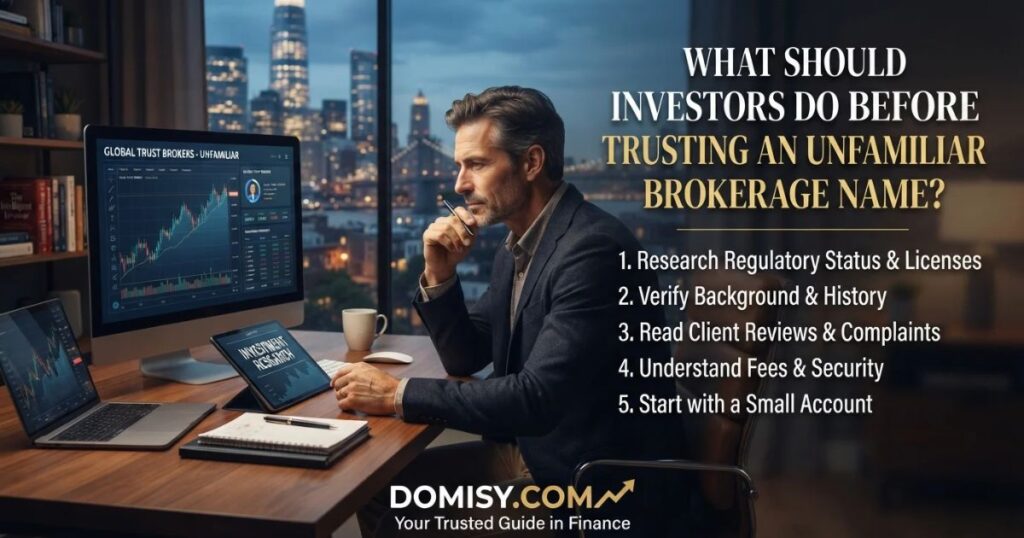
If a financial name is unfamiliar, don’t assume it’s legitimate or illegitimate based on appearance.
Instead, build a quick evidence trail.
Find the legal entity. Confirm registration. Check the representative. Understand custody. Read the fees. Then examine regulatory disclosures.
That process is useful whether you’re researching Newstown CraigScott Capital, a major brokerage, or a brand-new investment platform.
Verify Registration, Fees, Custody, and Written Disclosures
Before transferring money, you should be able to answer four basic questions:
- Who legally operates the business?
- What is it registered to do?
- Where will my money and securities be held?
- What fees and risks have been disclosed?
If the answers are clear and independently verifiable, you have a much stronger foundation for making your own decision.
If they’re vague, keep researching.
FAQ’s
Why Do Investors Still Search for Newstown CraigScott Capital in 2026?
People may encounter the phrase online and want to determine whether it refers to the historical Craig Scott Capital brokerage or another current entity.
What Is the Main Lesson From the Craig Scott Capital Story?
The main lesson is to verify a firm’s legal identity, registration, regulatory record, fees, and custody arrangements before trusting financial claims.
Is Newstown CraigScott Capital Legitimate?
The phrase alone doesn’t establish a current regulated brokerage. The documented historical entity is Craig Scott Capital, LLC, which FINRA expelled in 2017.
Why Are Regulatory Records Important?
Regulatory records provide primary evidence about registration, enforcement actions, disciplinary findings, and other matters that promotional websites may omit.
Can Online Reviews Replace Regulatory Research?
No. Reviews can reveal questions worth investigating, but official FINRA, SEC, and state records provide stronger evidence about registration and regulatory history.
What Is the Best Way to Verify a Brokerage Firm?
Start with the exact legal name, then check FINRA BrokerCheck, SEC records, state regulators, professional registrations, fees, and custody arrangements.
Should Investors Rely on Newstown CraigScott Capital Information When Making Decisions?
Use online information as a starting point, then verify important claims through current regulatory records and official documents before making financial decisions.
Conclusion
Understanding the newstown craigscott capital full background starts with separating the modern search phrase from the historical Craig Scott Capital, LLC record. The documented brokerage had a regulatory history that investors should review carefully. If you’re researching the name today, don’t rely on branding alone. Check official records, registration details, and the firm’s exact legal identity before making financial decisions.
Online searches can also mix unrelated terms, including pushwiki com, crypings com, and simplifydiggs com. Even a question like “i am a college student. are la roche-posay products better for acne-prone skin than neutrogena?” has nothing to do with brokerage research. Similarly, a tiktok viewer belongs to a different type of online search.
The key takeaway is simple: verify first and trust later. Review FINRA and SEC information, understand fees, confirm asset custody, and read important disclosures. A professional-looking website isn’t enough. Taking a few extra minutes to check the facts can help you make a more informed financial decision.